












Fake Research Scandal Exposed — "Daily Qaum" Unmasks Pakistan’s Education Mafia
Fake Research Scandal Exposed — "Daily Qaum" Unmasks Pakistan’s Education Mafia

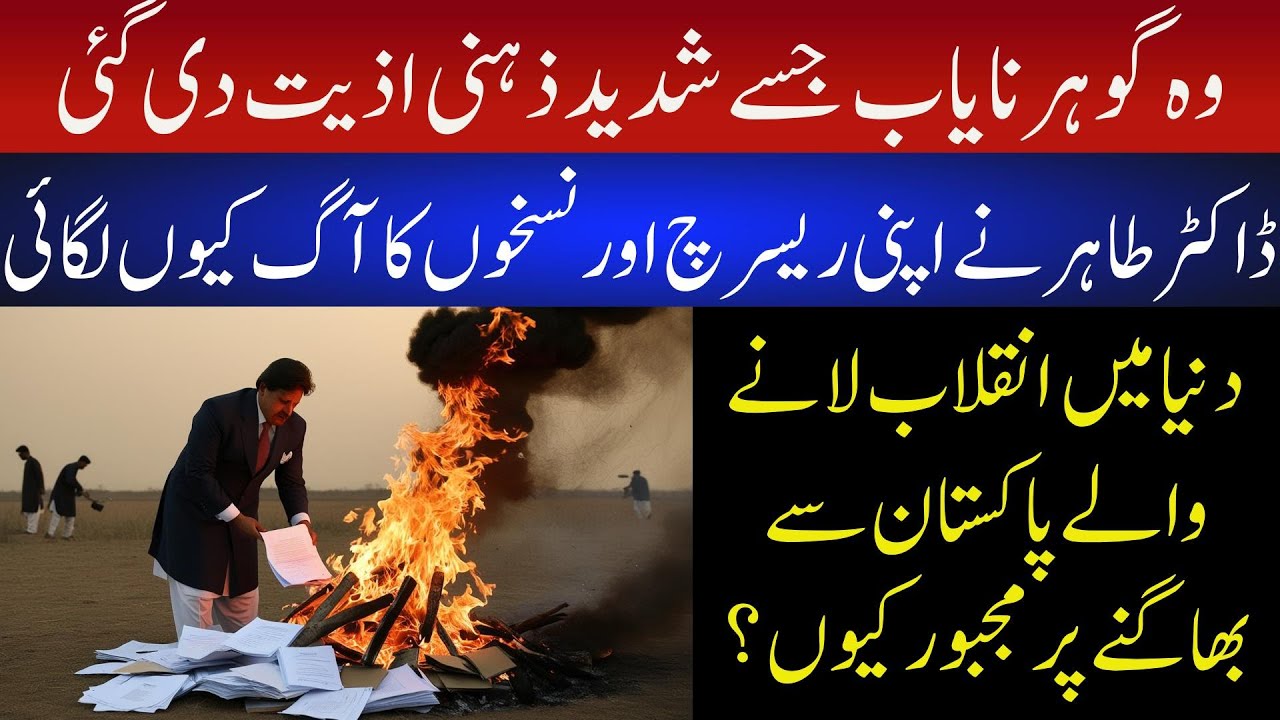
A chilling reality has been uncovered behind the walls of Pakistan’s universities. Where the light of knowledge was meant to shine, shadows of corruption are being traded. What was once a sacred bond between teacher and student has transformed into a cold, commercial transaction. This is the story of the "Research Mafia"—a network of professors and scholars who have turned degrees into commodities and hijacked the future of an entire generation.
The Toll on the Soul: Buying Numbers and Grades
Reports from across the country, particularly from Multan to Hyderabad, reveal a systemic decay in higher education. A prominent female professor from Multan recently exposed the "Education Mafia," describing how teachers ruthlessly exploit students for financial gain.
"It is a tragedy for my nation that the teacher is busy looting students to make money," she stated. "I have heard of a professor demanding a mobile phone just to award passing marks in a Viva."
Students are reportedly paying hundreds of thousands of rupees under various pretexts:
-
Thesis Assistance: Paying for someone else to write their research.
-
Article Publication: Paying "fees" to get papers into journals.
-
Viva Success: Bribery to ensure graduation.
The "First Author" Scam
The corruption extends beyond borders. A professor from Hyderabad, currently stationed at a top-ranked university in South Korea, highlighted a particularly "disgusting business": the theft of intellectual property.
To secure promotions (which require a specific number of publications), professors often force their names as the "First Author" on papers entirely researched and funded by their students.
-
The Student: Provides the labor, the data, and the funding.
-
The Teacher: Takes the credit and the promotion.
One PhD candidate from a Women's University shared her ordeal: she was told that unless she paid the full "paper fee," her name would be demoted to "Second Author," and fictitious names would be added to fill the payment gap.
A Paper Kingdom with No Products
The investigative team at Daily Qaum raised a fundamental question: What is the actual value of these thousands of research papers?
-
Has Pakistan created a single original product from these 800–1000 annual papers?
-
Has any of this research been applied to the local industry?
-
Have international-level labs been established?
The answer, according to a professor from Narowal University, is a resounding no.
"In this country, research papers are the biggest fraud. If you have money, you can buy a paper written by someone else and get it published. Genuine research exists, but it is rare."
The "Six-in-One" Corrupt Model
A senior professor from UET Lahore described a "magical" way some faculty members exploit the system to kill six birds with one stone:
-
Payment 1: The teacher charges the student to write the thesis.
-
Payment 2: The teacher supervises the same thesis and collects a "supervision allowance" from the university.
-
Payment 3: A research paper is extracted from the thesis.
-
Payment 4: The teacher adds multiple "guest authors" to the paper for a fee.
-
Payment 5: The teacher includes their own name to meet promotion criteria.
-
Payment 6: The teacher uses the publication to claim government research grants.
The Systemic Failure
A scholar who completed a Post-Doctorate in China pointed out that the fault lies within the system itself. The current "Publish or Perish" policy forces academics to prioritize quantity over quality.
-
Associate Professors need 10 papers.
-
Professors need 15 papers. The system doesn't care where they are published or if they benefit society; it only cares that the box is checked.
One anecdote highlights the sheer lack of ethics: A professor from a prestigious institution sent a paper for review that contained zero references. When asked to provide citations, he simply replied, "Just add any references you like."
Conclusion: A Hollow Legacy
While sincere and honest researchers still exist, they are struggling in a system that values numbers over merit. The gravity of the situation was summed up by a journalist asking a high-ranking official what his first step would be upon taking office. The official joked: "I would first make my own CV and past records disappear."
This is not just a story of academic dishonesty; it is a warning. If the ink of the teacher is used to write receipts instead of wisdom, the books of the future will be empty.
What's Your Reaction?